
Uncovering the Past through Dramaturgy
Last week, I received a remarkable email from the dramaturg for an upcoming production of Dear Jack, Dear Louise. When I saw the subject, I braced myself for the anticipated historical nitpicking: “The movie you mention in Act I wasn’t released until the year after the play is set.” “That newspaper article you quote on page 43 was published on a Tuesday, not a Friday.” I’ve rarely been so delighted to be wrong.
It’s no secret that sometimes dramaturgs drive playwrights a little crazy.
It’s the dramaturg’s job to comb through the play and research all the details embedded in the story: the historical period, the cultural references, the slang and other uses of language, and anything else that might help the director and actors fill out the world they’re building on stage.
Of course, as a playwright, my first and most important job is to make the play work. To tell a story that holds the audience. Sometimes in order to do that, the dramaturgical details have to go.
One of my favorite examples came during the world premiere of my comedy Lend Me A Soprano. The play is an adaptation of my earlier Lend Me A Tenor, with all the big juicy roles written for women rather than men. Instead of the great tenor Tito Merelli coming to the Cleveland Grand Opera to perform Pagliacci, the great soprano Elena Firenzi comes to perform Carmen. At intermission during an early preview, a woman bustled up to me to inform me that, in fact, Carmen is a mezzo-soprano. I stand firmly by the answer I gave her: “You’re right, Madam, but no one is going to buy a ticket to a play called Lend Me A Mezzo-Soprano.”
After years of this sort of “helpful” comment, I tend to get a little stressed out when a dramaturgical email lands in my inbox. But this time was different.
On March 15, an indescribable treasure trove arrived from Matt Lytle, the assistant director and dramaturg for Gulfshore Playhouse’s production of Dear Jack, Dear Louise. The play is about my parents, Jack and Louise Ludwig. It tells the true story of their meeting through letters during WWII, while he was an army doctor stationed in Oregon and she was an aspiring showgirl in New York City.
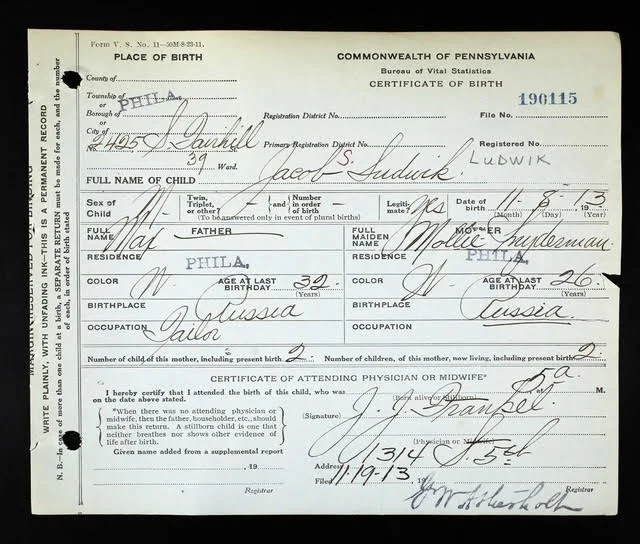
Wearing his dramaturg cap, Matt had worked with his colleague Mollie Heil—stage manager at Alabama Shakespeare Festival—to uncover records about my family I’d never seen before. Among them, they found my dad’s birth certificate, where I confirmed for the first time that both of his parents were born in Russia and learned, whether by error or assimilation, that he was registered at birth with the last name “Ludwik”. And perhaps most curious and precious to me, they found my dad’s draft card.
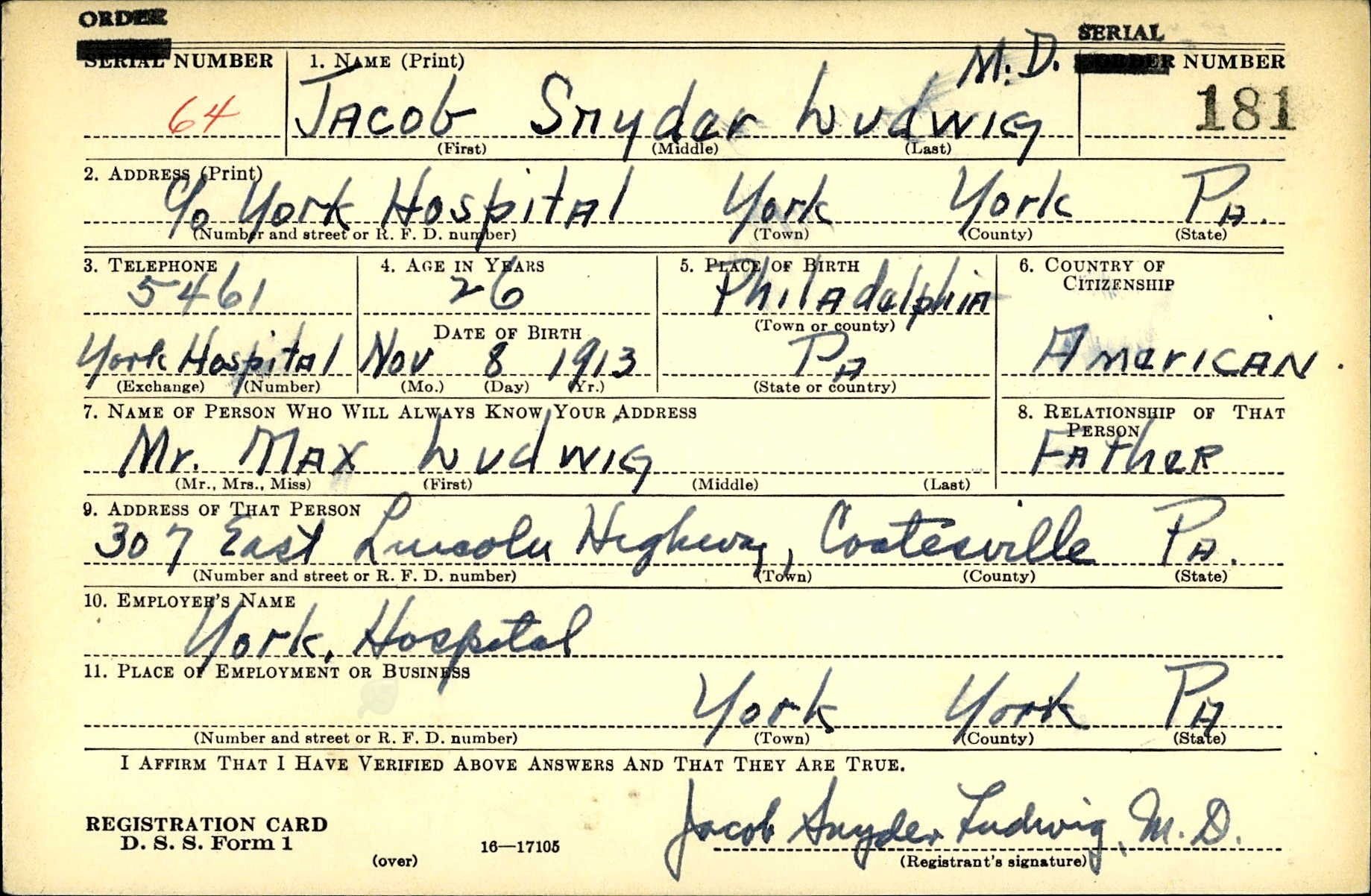
It takes my breath away. So today, I’m humbled by the dramaturgy that returned just a little of my family’s history to me. The magic of theatre isn’t just for the audience.